
Utilizing operations research, simulation, and predictive analytics to forecast and control the spread of infectious diseases.
Simulation Modeling for Guinea Worm Disease Eradication
Simulation modeling has played a crucial role in the global effort to eradicate Guinea worm disease (GWD), a debilitating condition affecting impoverished communities in Africa. GWD causes severe pain and disability due to the emergence of worms from painful blisters and often leads to secondary infections. Affected individuals may experience lasting physical and financial hardship, placing a burden on families and communities.
In 1986, there were 3.5 million human cases of GWD. Thanks to community interventions spearheaded by The Carter Center, the World Health Organization and UNICEF as partners in the global campaign to eradicate Guinea worm disease, this number dropped to just 15 human cases in 2024. GWD remains endemic in 6 countries, largely due to infections in dogs. Infected dogs and other animals continue to contaminate water sources, posing risks to human populations. Simulation models help programs like the Chad Guinea Worm Eradication Program understand transmission dynamics and predict the impact of interventions.
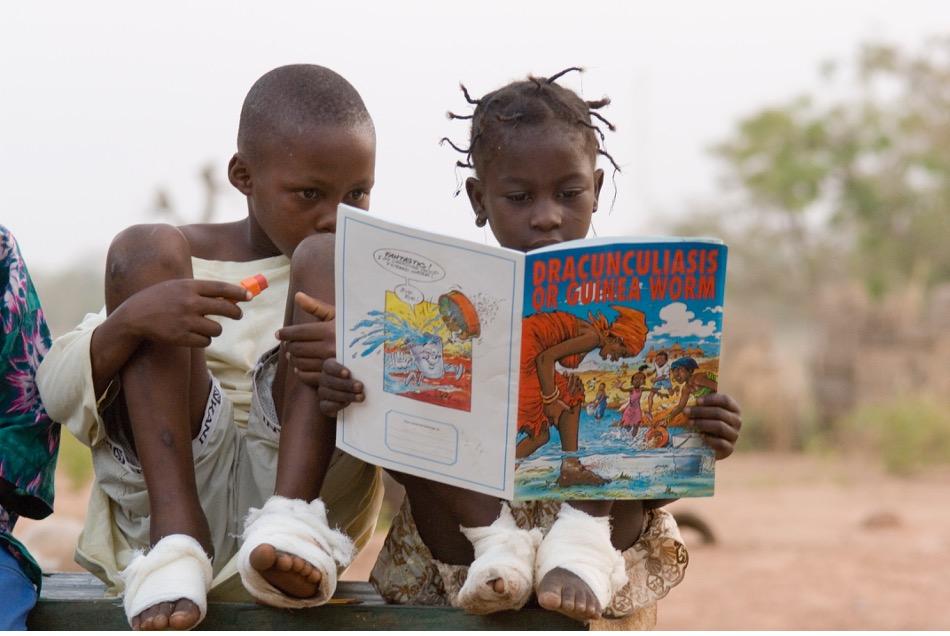
Location: Savelugu, Ghana | Date: Feb. 5, 2007 | Photo: The Carter Center/L. Gubb
Related Publications
Simulation Modeling for Guinea Worm Disease Eradication
Simulation modeling has played a crucial role in the global effort to eradicate Guinea worm disease (GWD), a debilitating condition affecting impoverished communities in Africa. GWD causes severe pain and disability due to the emergence of worms from painful blisters and often leads to secondary infections. Affected individuals may experience lasting physical and financial hardship, placing a burden on families and communities.
In 1986, there were 3.5 million human cases of GWD. Thanks to community interventions spearheaded by The Carter Center, the World Health Organization and UNICEF as partners in the global campaign to eradicate Guinea worm disease, this number dropped to just 15 human cases in 2024. GWD remains endemic in 6 countries, largely due to infections in dogs. Infected dogs and other animals continue to contaminate water sources, posing risks to human populations. Simulation models help programs like the Chad Guinea Worm Eradication Program understand transmission dynamics and predict the impact of interventions.
Location: Savelugu, Ghana | Date: Feb. 5, 2007 | Photo: The Carter Center/L. Gubb